Context
FIRE planning sounds simple — save, invest, retire — but irregular expenses like medical bills, tuition, and emergencies throw even the best plans off track. During my 4-month internship at Baniya, I saw this firsthand: users were under-accounting for unpredictable costs, which skewed their projections and, more importantly, made them anxious about whether their plans could actually work.
The Gap
The app had no support for one-time expenses, so users were either abandoning plans or losing trust in projections entirely — but a full overhaul wasn't possible on our MVP timeline. The real insight wasn't that users wanted better data. They wanted reassurance.
Understanding the Problem Space
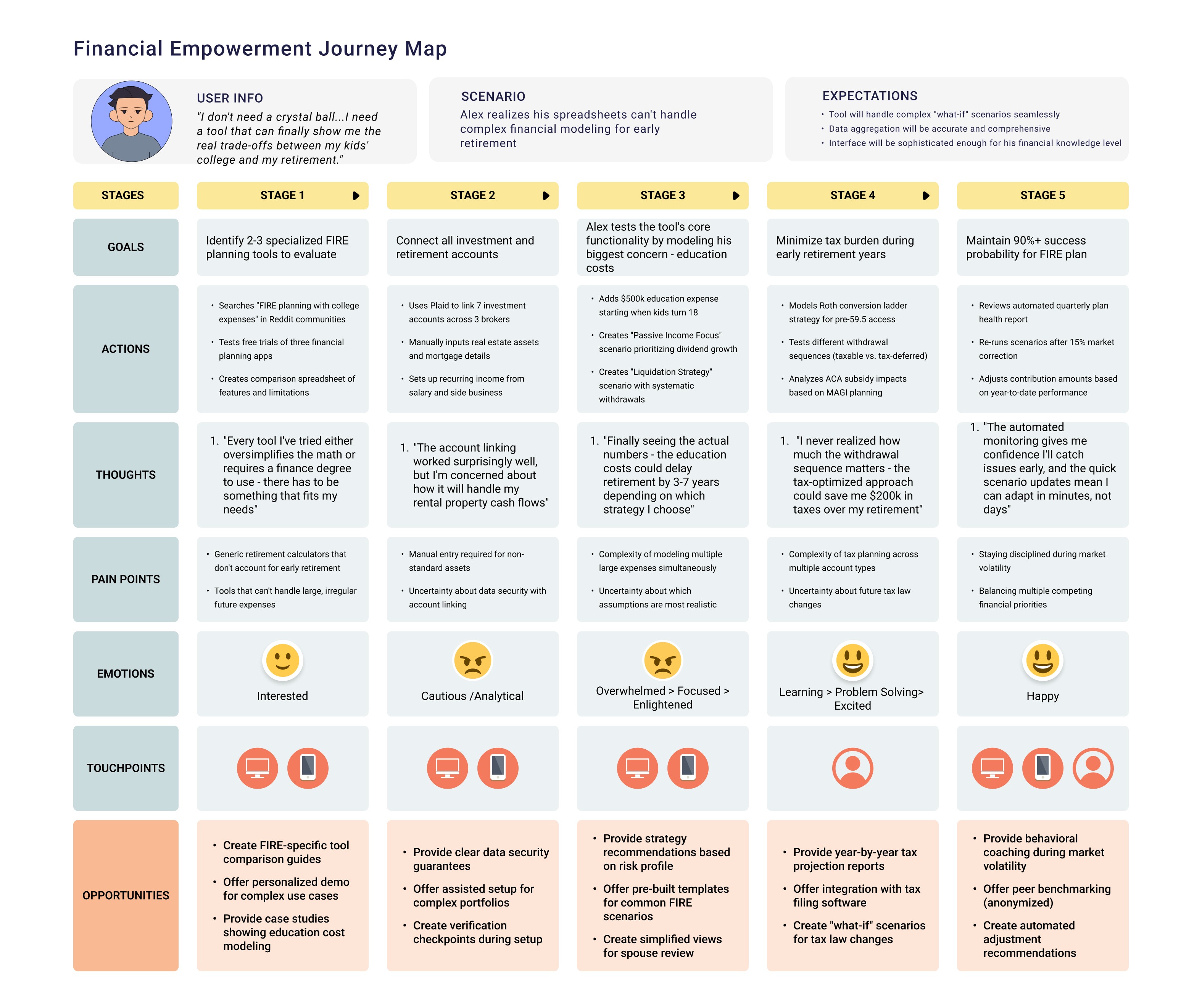
To ground the research in a real use case, I mapped the full journey of Alex — a financially sophisticated user who discovered Baniya through Reddit while searching for a tool that could handle the actual complexity of his life. His core frustration: every tool he tried either oversimplified the math or required a finance degree to operate.
Following Alex across five stages — from initial tool evaluation through long-term plan maintenance — revealed where the real breakdowns happened. Connecting accounts went smoothly, but the moment he tried to model competing priorities like his kids' college costs against his retirement timeline, the experience fell apart. The complexity of running multiple large expense scenarios simultaneously created decision paralysis, not clarity.
What the journey map made clear was that Alex's emotional arc wasn't linear. He moved from interested to overwhelmed before ever reaching confident — and the product had no real mechanism to help him through that middle stage. The opportunity wasn't more data. It was better scaffolding around the moments where users got stuck and started to distrust their own plan.
The Craft
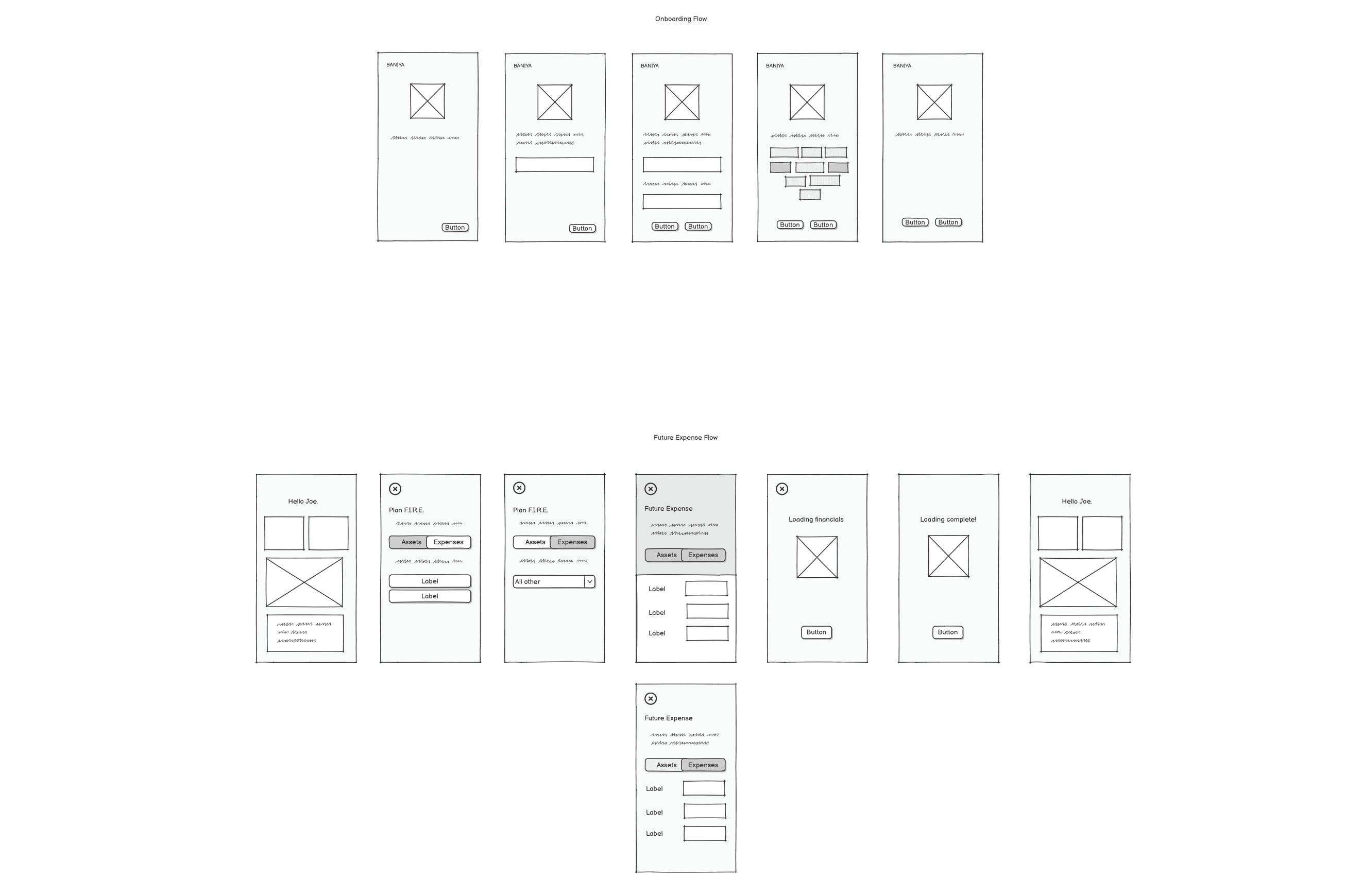
Two features shipped in four weeks: a guided Future Expense Tool that replaced manual input with sliders to cut decision paralysis, and a Chatbot Assistant designed to feel like a supportive friend — plain language, contextual prompts, and community-driven insights to normalize financial anxiety.
Impact & Learnings
Post-launch, plan completion rates increased by 46%. But the number that stuck with me more was qualitative, users reaching out through our WhatsApp channel saying they were surprised and relieved by the chatbot, that it actually helped them feel less anxious about their plan. One user put it simply: "I finally feel like my plan accounts for real life, not just spreadsheet life."
Working directly with the founder was its own education. I got a close look at how early-stage startups actually operate — the speed, the ambiguity, the constant reprioritization. One of the biggest things I took away was that craft and speed aren't opposites — but you have to know when each one deserves more of your attention. At Baniya, that meant getting comfortable shipping work that was good enough to learn from, then making it better.
"I finally feel like my plan accounts for real life, not just spreadsheet life." — Baniya User
Working directly with the founder gave me powerful insight into how startup operate and the type of ambiguity and speed that comes with designing and shipping an early-stage product. One of the biggest lessons I learned was how to prioritize
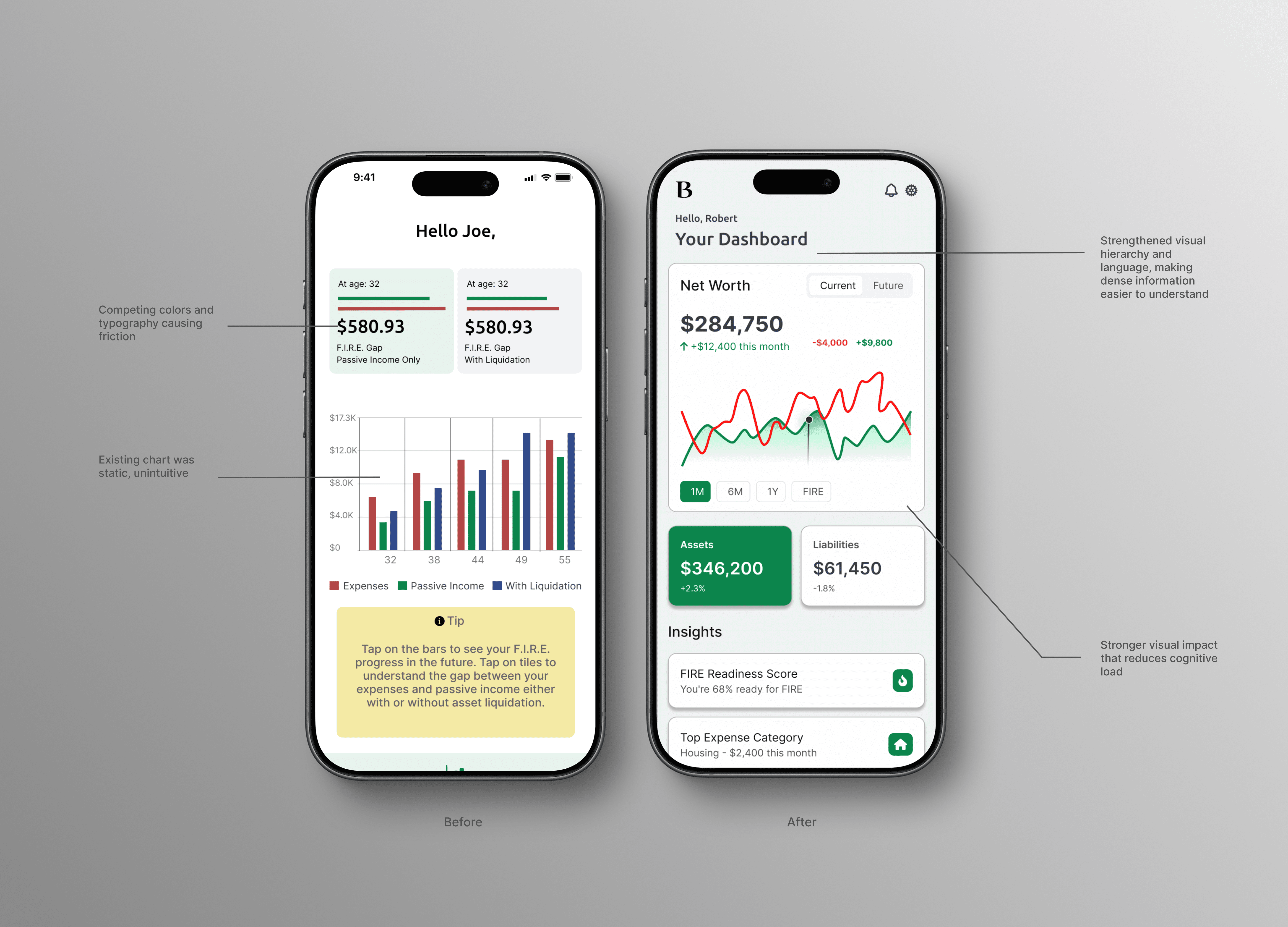
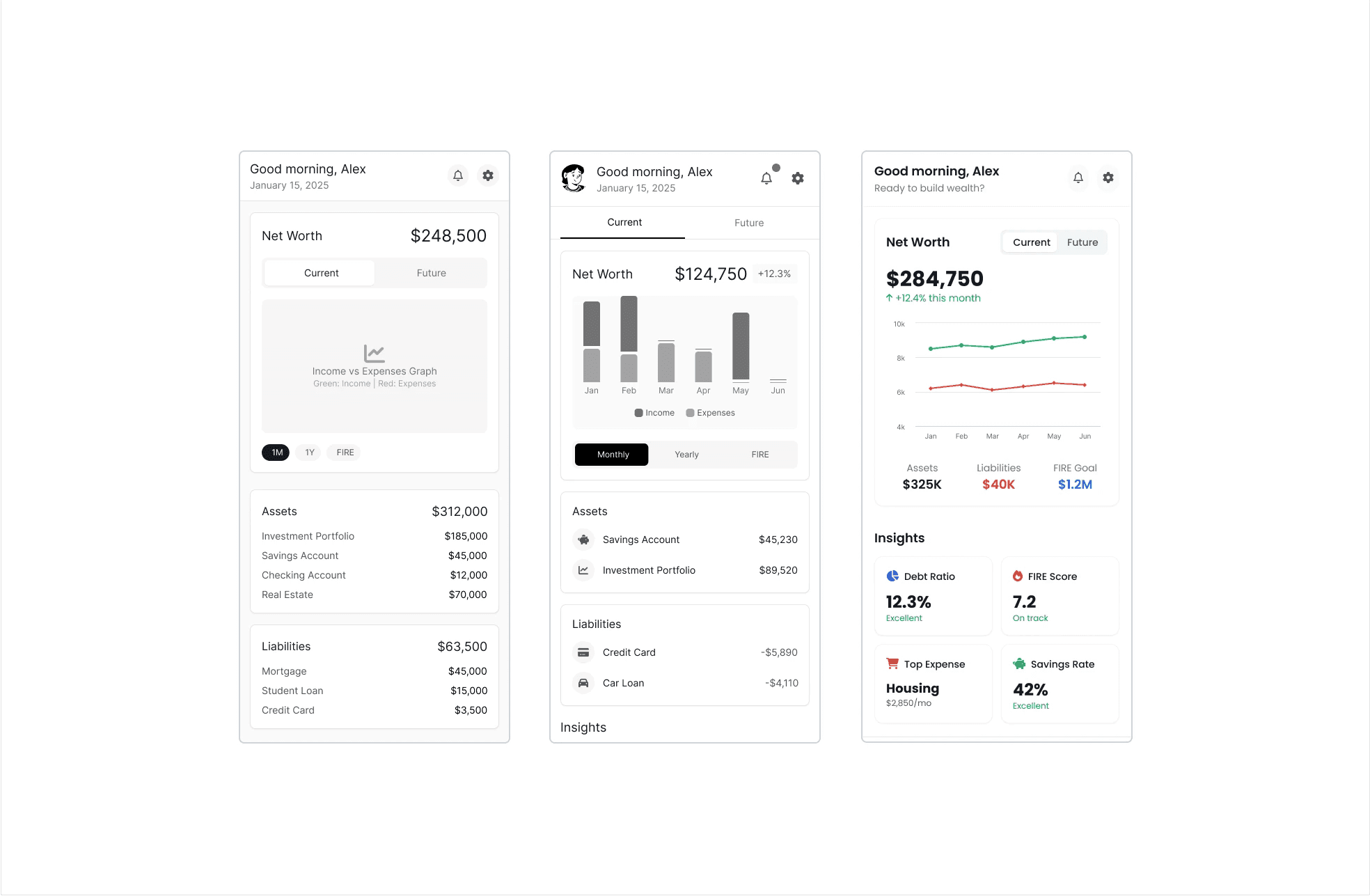
Proposed Redesign
To take this further, I'd rebuild the dashboard around storytelling over raw numbers — more whitespace, clearer visual hierarchy, and a modern aesthetic that reduces cognitive load without sacrificing depth.