
Rethinking the design process means questioning habits, embracing flexibility, and finding new ways to create with purpose.
The premise
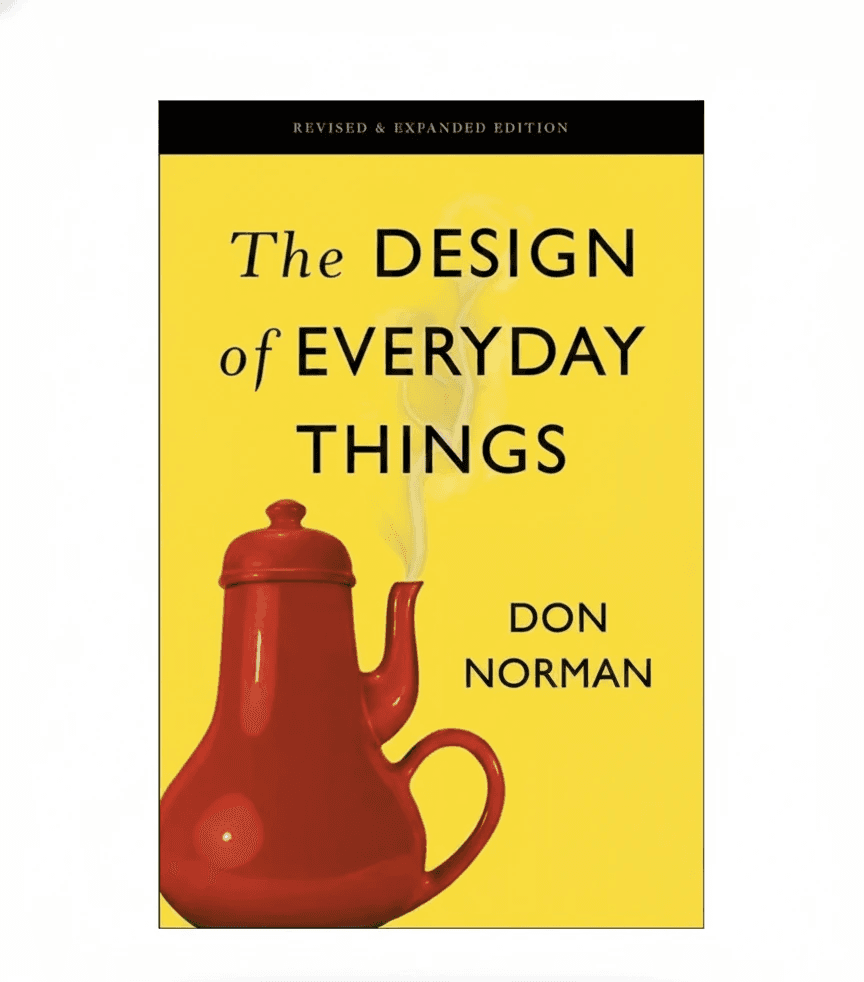
Everyday objects fail us constantly. Doors that push when they should pull. Stoves with cryptic controls. Interfaces that punish mistakes instead of preventing them. These aren't user errors—they're design failures. Norman argues that good design makes the right action obvious and the wrong one impossible.
Why you should read this
This is the foundational text for understanding human-centered design. Norman introduces affordances, signifiers, feedback, and mental models—concepts that apply whether you're designing a door handle or a mobile app. If you want to build things people can actually use, start here.
Learn why people struggle with "simple" products.
Understand how design shapes behavior.
Build empathy for the humans using your work.
Things I learned
Complexity isn't the enemy—poor mapping is. A control should visually correspond to its function. Feedback should confirm every action. Constraints should guide, not frustrate. When something goes wrong, blame the design, not the person. The best products feel invisible because the design does the thinking for you.
Suggested
Continue Reading
More readings you may find useful, curated by yours truly